
MAD Architects Completes the First Signature Stadium Of Quzhou Sports Park – The World’s Largest Earth-Sheltered Buildings
Quick Summary Audio MAD Architects Completes the First Signature Stadium of Quzhou Sports Park The World’s Largest Earth-Sheltered Buildings Quzhou is a beautiful historic city in China (about 250 miles southwest of Shanghai) with a population (as of the 2020 census) of 2,276,184
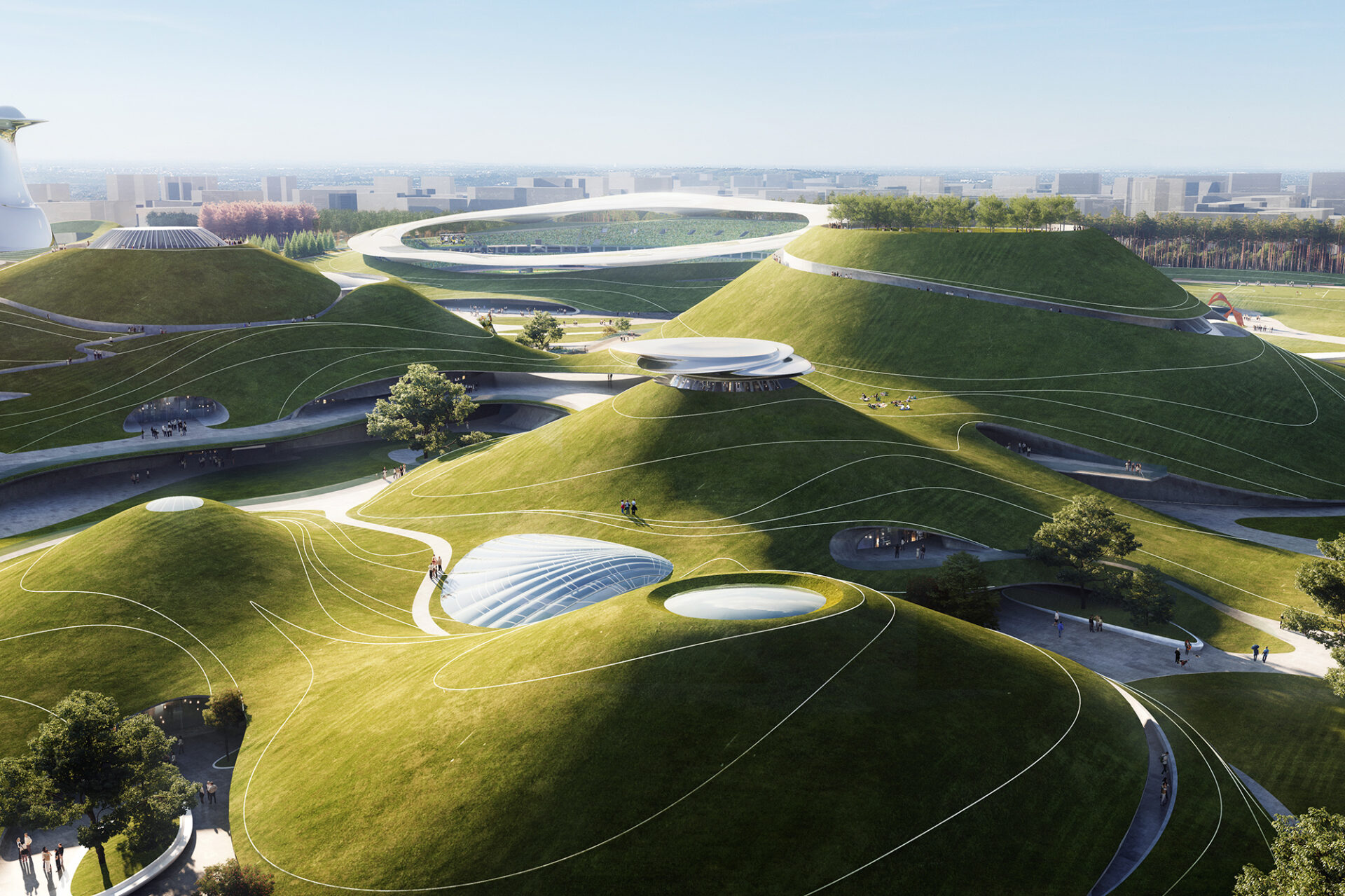
MAD Architects Completes the First Signature Stadium of Quzhou Sports Park
The World’s Largest Earth-Sheltered Buildings
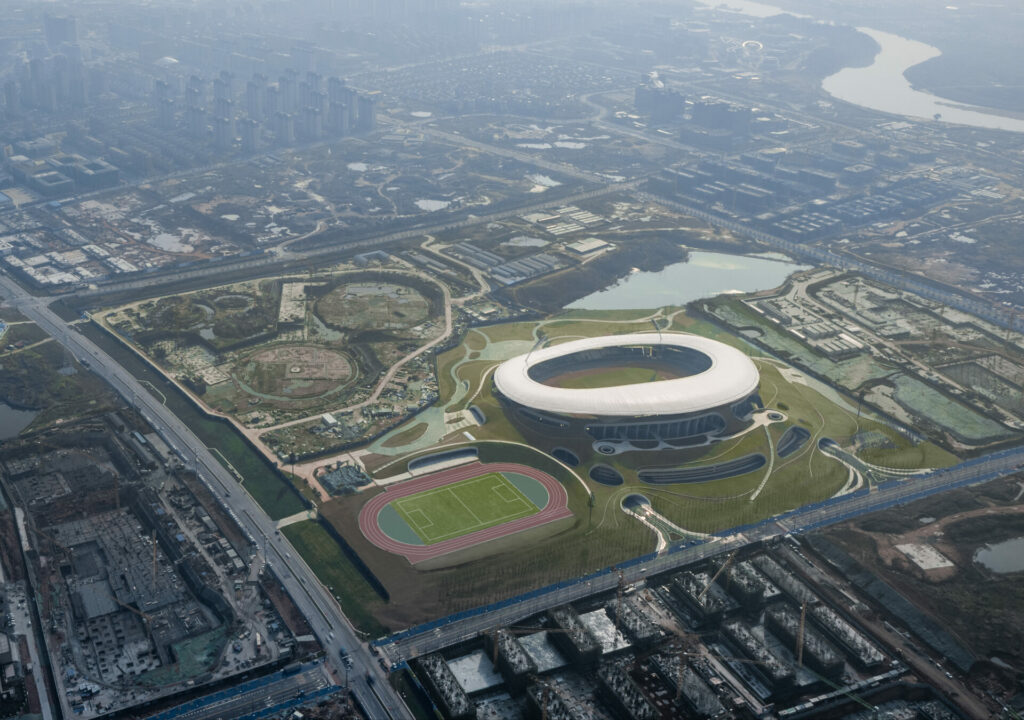
Quzhou is a beautiful historic city in China (about 250 miles southwest of Shanghai) with a population (as of the 2020 census) of 2,276,184 inhabitants. It is a city of skyscrapers and forests, a transportation hub and an agricultural center, a city of mountains and plains. Amidst these seeming contradictions, MAD Architects, led by Ma Yansong, completed Quzhou Stadium, the centerpiece of a complex spanning over 7.5 million square feet that will be known as Quzhou Sports Park in October.
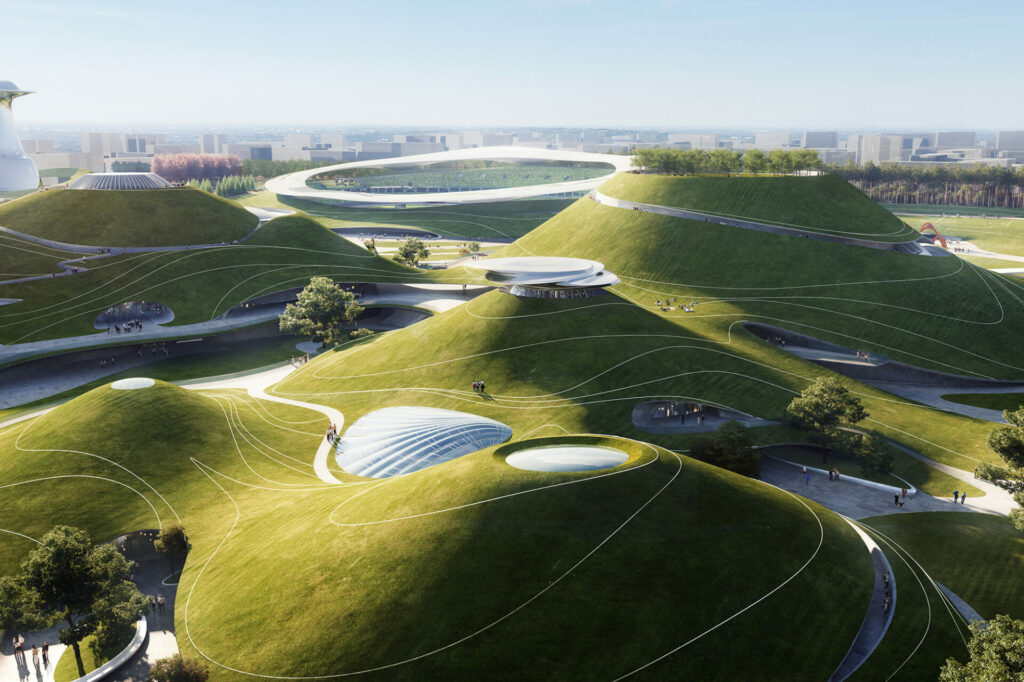
Courtesy of CreatAR Images and MAD Architects
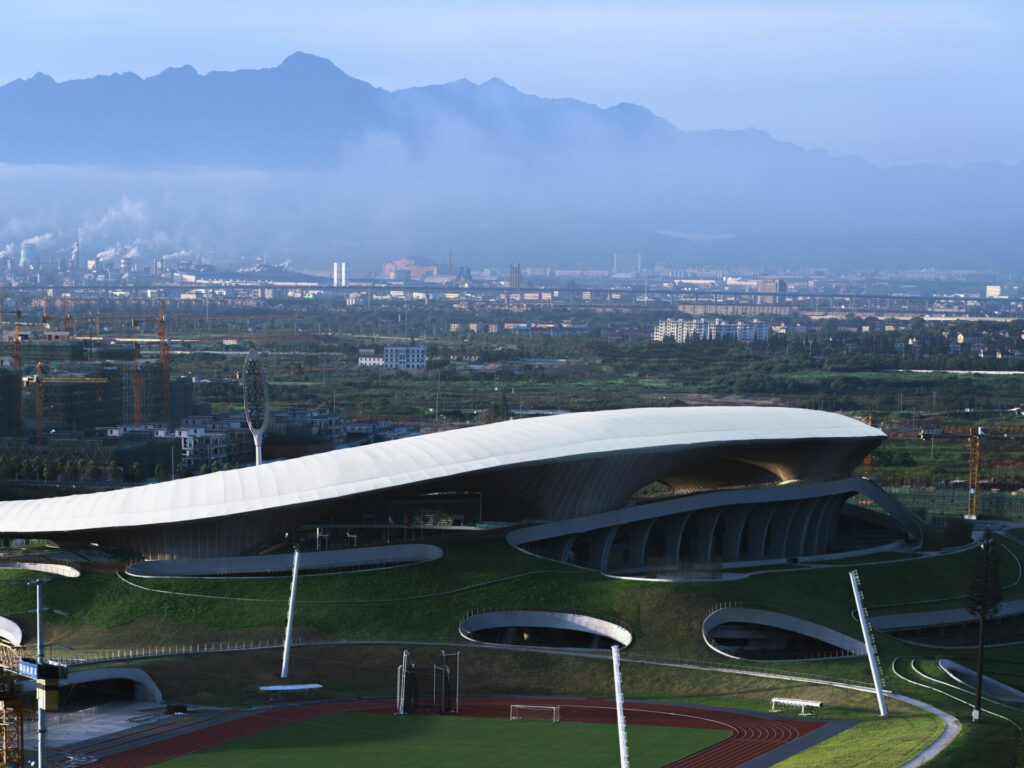
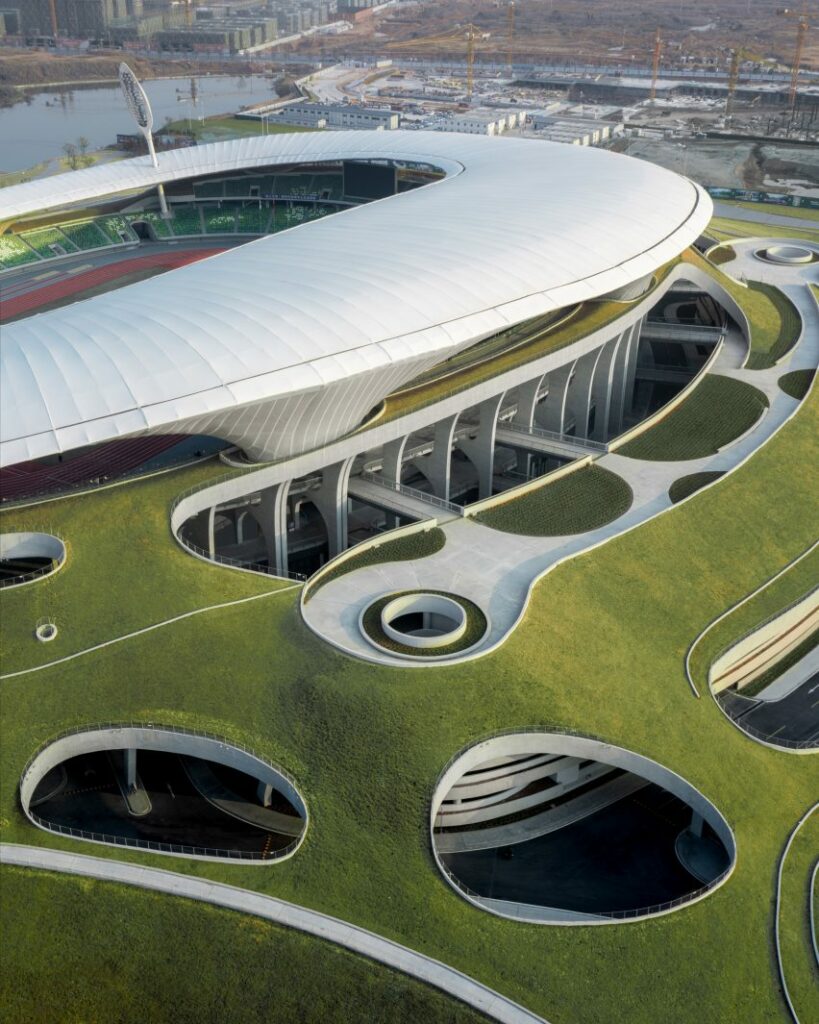
Despite its impressive 30,000-seat capacity, the stadium was designed to appear as a continuation of the surrounding landscape rather than an object standing out against it. Unlike the typically fortress-like stadiums built in urban areas around the world, MAD Architects was determined to build a stadium that would embed much of the technology that went into its production so that it can instead be open to the surrounding public space from nearly every angle.
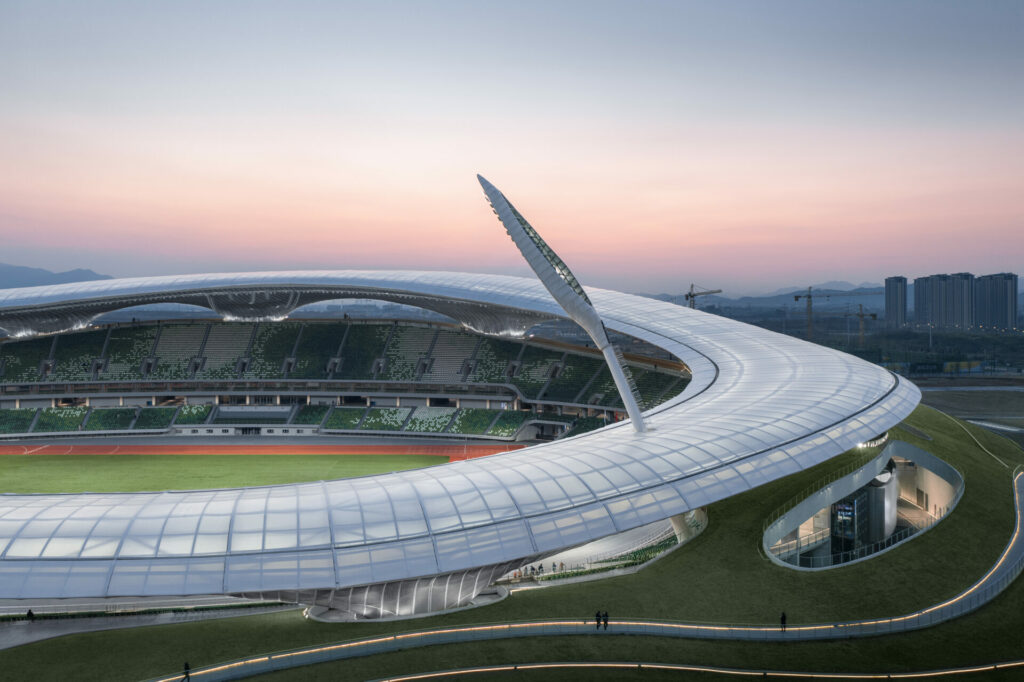
MAD_Quzhou Stadium photo by CreatAR Images ©MAD Architects
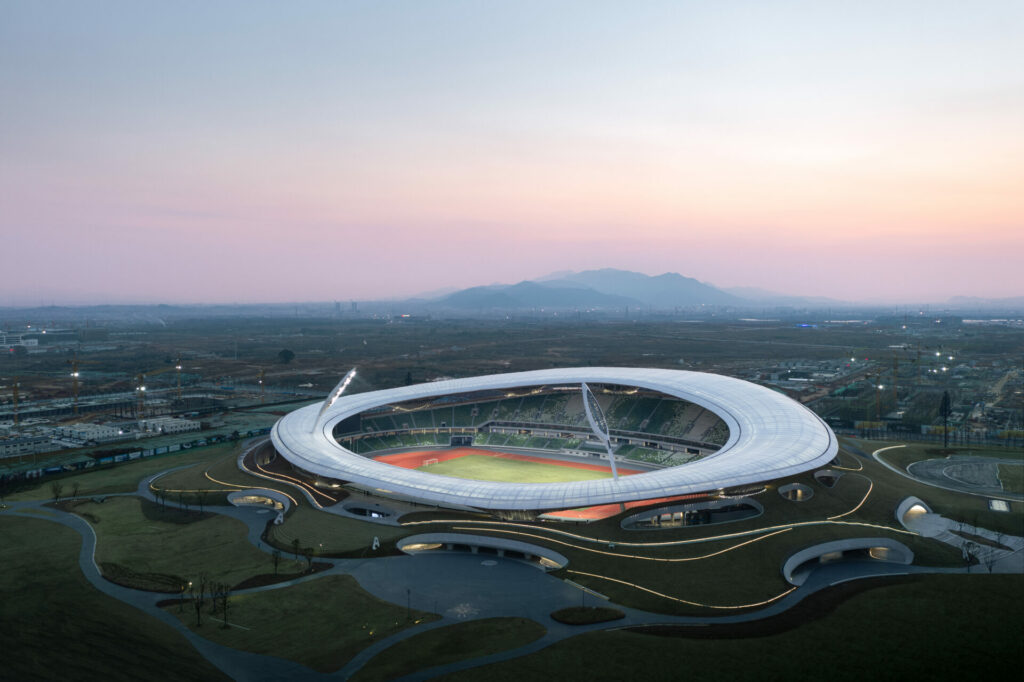
MAD_Quzhou Stadium photo by CreatAR Images ©MAD Architects
They considered the stadium grounds as not only a dynamic park space adjacent to the city’s urban center amenable to athletic and leisurely recreation, but also an opportunity for a spiritual connection between people and nature. For Ma Yansong, the Quzhou stadium breaks away from the conventional sports architecture. It is conceived as a piece of land art that submerges itself into the nature and welcomes everyone to gather and share the sports spirit.
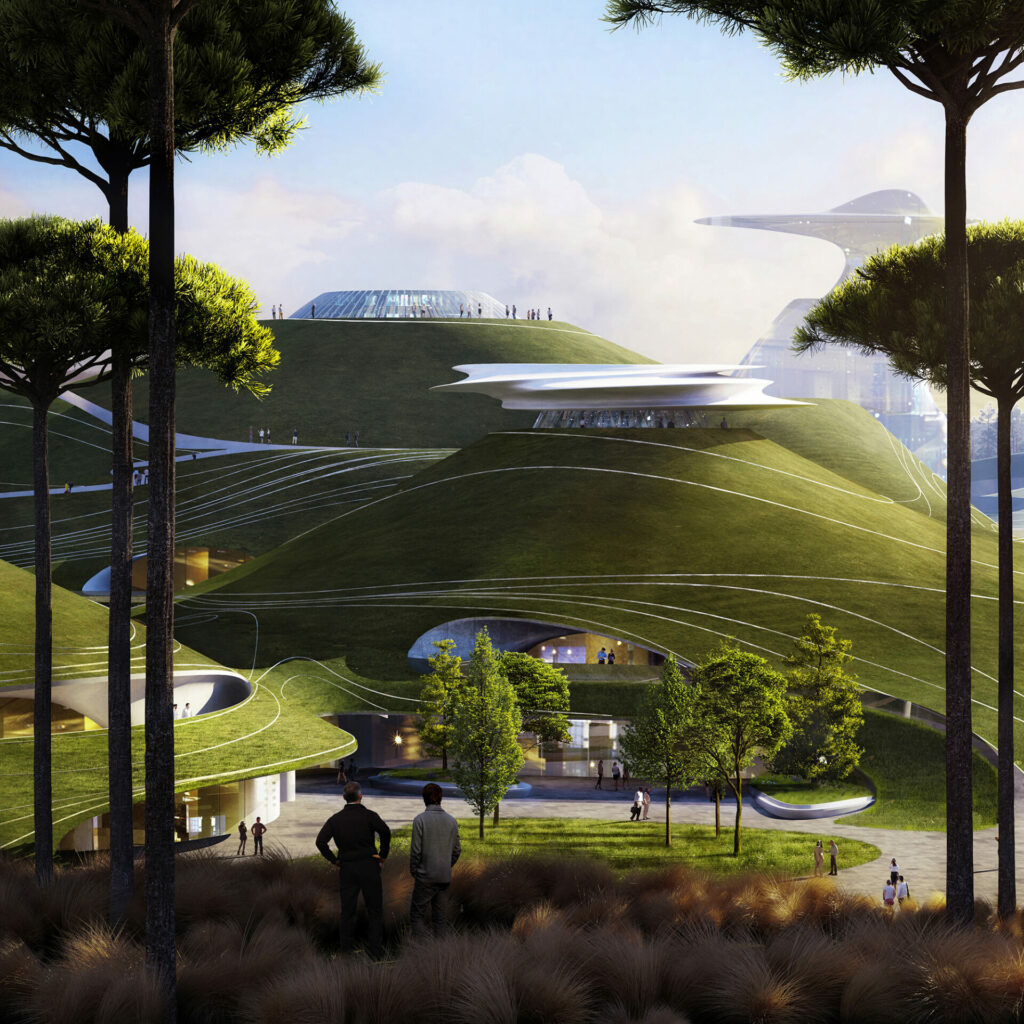
Courtesy of CreatAR Images and MAD Architects
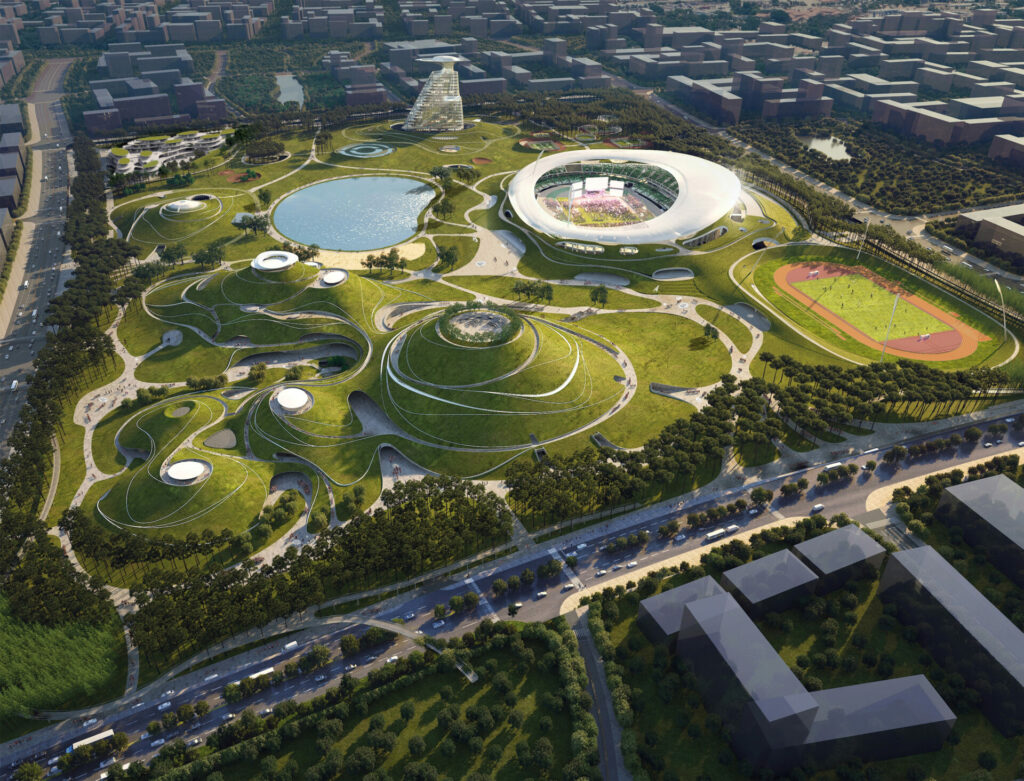
Courtesy of CreatAR Images and MAD Architects
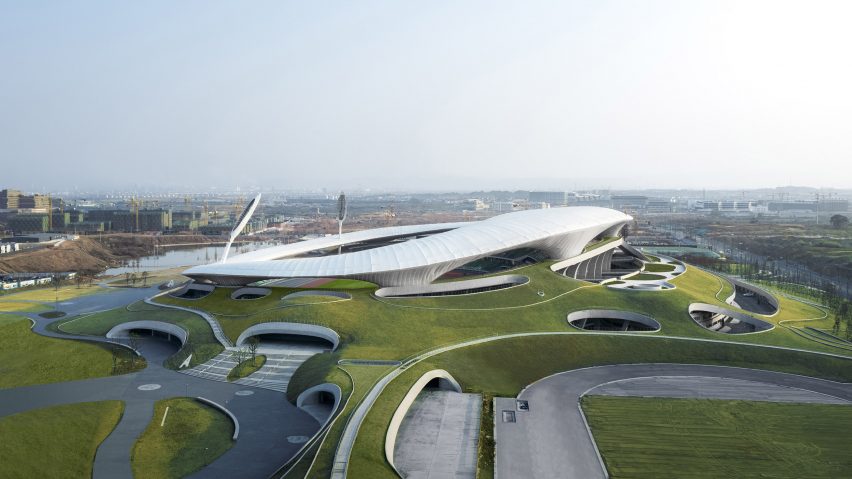
With this concept in mind, the undulations of the surrounding topography are carried through to the sloping facade, onto which visitors are encouraged to determine for themselves where the landscape ends and the building begins. Even when the stadium is closed, visitors are encouraged to climb the structure and treat it as an active piece of the landscape.
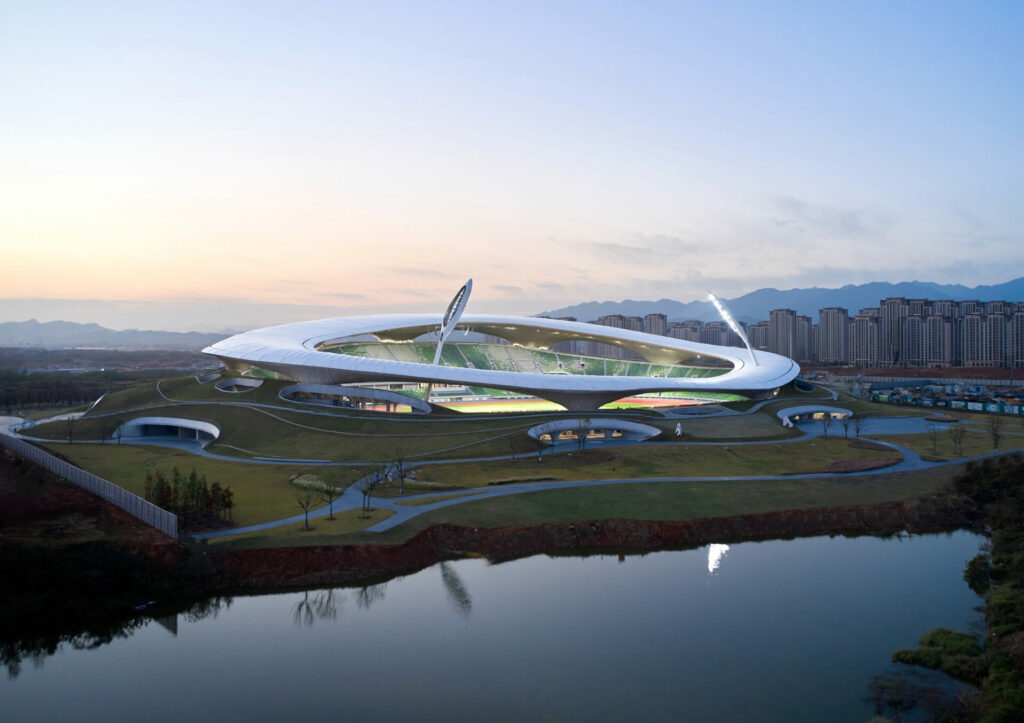
MAD_Quzhou Stadium photo by Aogvision ©MAD Architects
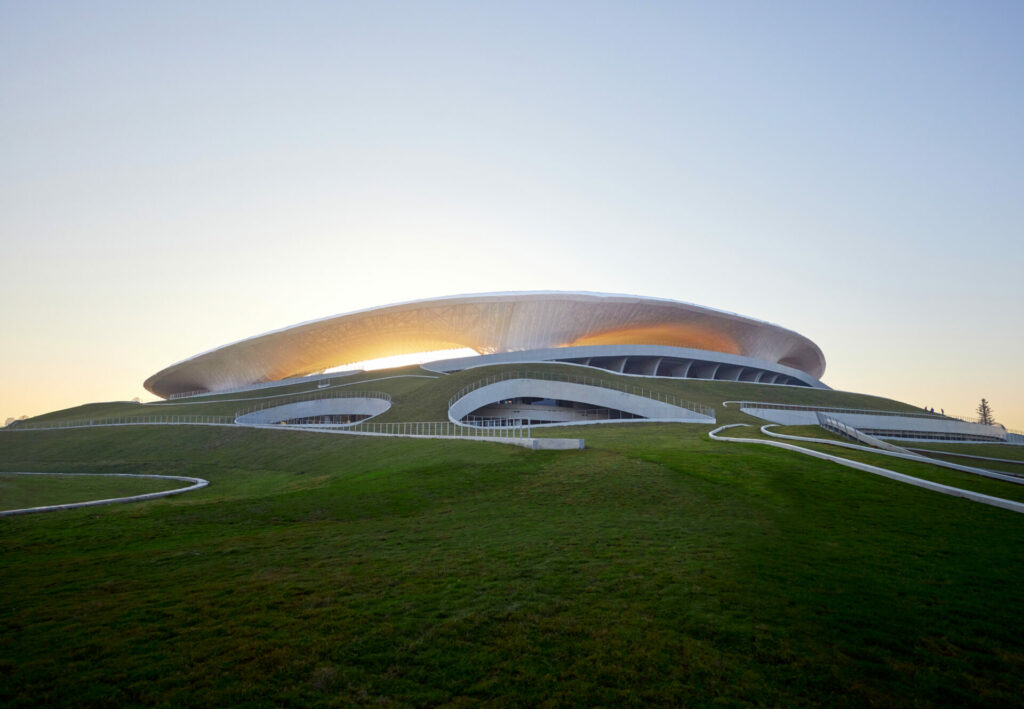
MAD_Quzhou Stadium photo by Aogvision ©MAD Architects
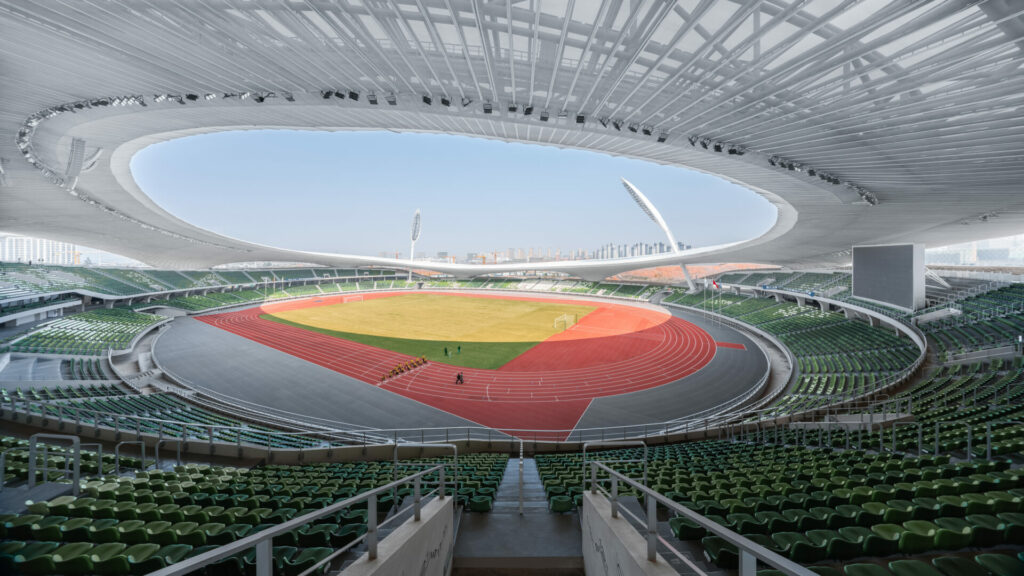
Appearing from a distance like a halo hovering gently above the landscape, the overhanging structure of Quzhou Stadium is the newest crown jewel of the city. Visitors approach the stadium by walking through the canopy from one of eight entrances, all of which feature complex double-curved surfaces that ripple overhead like ocean waves. The canopy is supported by only nine drop points with a maximum span of 104 yards between them to allow the building to “float” over the landscape while offering framed perspectives of the city from many points of view.
MAD_Quzhou Stadium photo by Arch Exist ©MAD Architects
MAD_Quzhou Stadium photo by CreatAR Images ©MAD Architects
The 60 sets of concrete column walls that support the stadium are composed of exposed wood-grained fair-faced concrete sheet walls that brings the warmth feeling with texture to such material and blur the boundary between interior and exterior. The canopy is internally composed of self-supporting steel, onto which a translucent light-emitting membrane material was wrapped that could take on the complex geometry required for the long-spanning design.
Though the canopy is composed of a monumental steel frame, it appears lightweight thanks to the light-transmitting synthetic polymer PTFE membrane wrapped around the lower half of the structure that is composed of micro-perforations to improve the acoustic performance throughout the stadium. The upper surface of the canopy is composed of a more solid PTFE membrane to prevent rain from entering the seating bowl.
MAD_Quzhou Stadium_by CreatAR Images
Courtesy of CreatAR Images and MAD Architects
The sinuous geometry is continued within the stadium itself, where up to 30,000 spectators can occupy the crater-like interior and catch select glimpses of the city and mountain landscape beyond. The seating undulates in relation to the surrounding landscape, which it also simulates as an array of shades of green that visually contrast the white canopy structure above them.
In addition to providing an intimate setting for spectatorship, the stadium was designed with a wide array of sustainable design features. Aside from the audience seating and arena, the majority of Quzhou Stadium’s facilities are located beneath the ground plane.
Large openings in the landscape allow for natural light to penetrate the parking garage, entry levels of the stadium. Across the entire structure, the stadium is engineered to absorb, store, and infiltrate rainwater, which will have the added effect of protecting the building from excess rain damage and leads to a substantial reduction in temperature fluctuations and energy consumption.
Courtesy of CreatAR Images and MAD Architects
As a piece of land art, MAD selected regionally specific plants that would require little maintenance to promote water conservation, while the outdoor signage for the stadium is composed of stone and metal and embedded within the ground plane to blend into the landscape. Moreover, all of the concrete materials found throughout the site were locally produced, thereby minimizing the carbon footprint associated with the transportation of materials throughout the construction process.
Quzhou Stadium represents the first of two construction stages for the Quzhou Sports Park complex, a major project first announced to the public in 2018 that will include a 10,000 seat gymnasium, a 2,000 seat natatorium, a science & technology museum, hotel accommodations, youth center and retail programs. The design of the buildings placed throughout the park break away from the traditional way of highlighting the structural strength of athletic facilities to instead convey a subtle inner beauty. When complete, Quzhou Sports Park will become the largest earth-sheltered complex in the world, and will provide a much-needed contrast to the dense urban fabric of the region.
More in Architecture
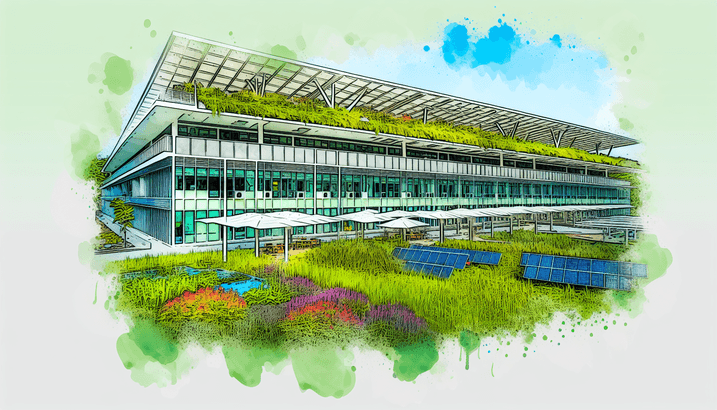
Sustainable Building Practices: 7 Game-Changing Techniques You Need to Know
Discover 7 innovative techniques in sustainable building that are revolutionizing the construction industry for a greener, more eco-friendly future.

Exploring the Human Touch in Architecture: Victoria Algranati's Artistic Endeavors
Quick Summary Audio In the realm of architecture, where precision and innovation intertwine, one would expect a heavy reliance on cutting-edge technology and computer-aided design. However, Victoria Algranati, an aspiring architecture designer hailing from Argentina, is challengi

The Art Of Creating Art — Stephen Muldoon
Quick Summary Audio Stephen MuldoonThe Art of Creating Art Stephen Muldoon is a completely self-taught artist with over 40 years of paintingexperience. After an extensive career in painting show motorcycles, cars andboats as well as creating frescoes, murals, landscapes, and port
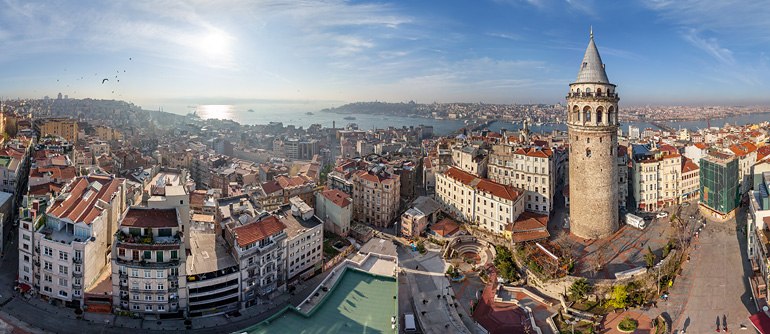
The Architecture Of Istanbul – A City Where Cultures Collide
Quick Summary Audio In June, the United Nations formally accepted Turkey ‘s request to change its official name to “Türkiye” (the Turkish language version, pronounced TURK-ee-yeh). The idea is to eliminate the association with the bird. Name changes are nothing new here. Istanbul