
Culture Island: Designing The New Abu Dhabi
Quick Summary Audio By Angela O’Byrne, FAIA For decades, Dubai has enjoyed a six-star reputation for the sumptuous, the ostentatious, and the hyperbolic. Home to the world’s largest building, an archipelago of daring man-made islands, and a logic-defying indoor ski slope, the cit
By Angela O’Byrne, FAIA
For decades, Dubai has enjoyed a six-star reputation for the sumptuous, the ostentatious, and the hyperbolic. Home to the world’s largest building, an archipelago of daring man-made islands, and a logic-defying indoor ski slope, the city’s unfettered fascination with the possibilities of human ingenuity and engineering have made it a dazzling international destination. In fact, Dubai’s audacious goal—to become the world’s most visited city—may soon come to fruition. It’s an impressive second act for a city whose dwindling oil reserves made a full-scale identity change a necessity.
Dubai isn’t the only city in the United Arab Emirates undergoing a world-welcoming reimagining. South of Dubai, along the Persian Gulf, lies another burgeoning (though decidedly more traditional) metropolis: Abu Dhabi. While still an oil-focused Emirate, it’s clear that the UAE’s second most populous city is also ready to attract the world to its doorstep. However, while Dubai has honed the art of conspicuous consumption, Abu Dhabi is betting big on another tourist draw: culture. If Dubai is famous for its hotels and shopping malls, Abu Dhabi will make its mark with museums and gift shops.
At the heart of Abu Dhabi’s cultural efforts is Saadiyat Island, a district undergoing a $27 billion development effort. The district will collect a staggering array of institutions—including a Frank Gehry-designed Guggenheim Museum and a Zaha Hadid-designed performing arts center—in a bid to attract the culture-curious to visit Abu Dhabi.
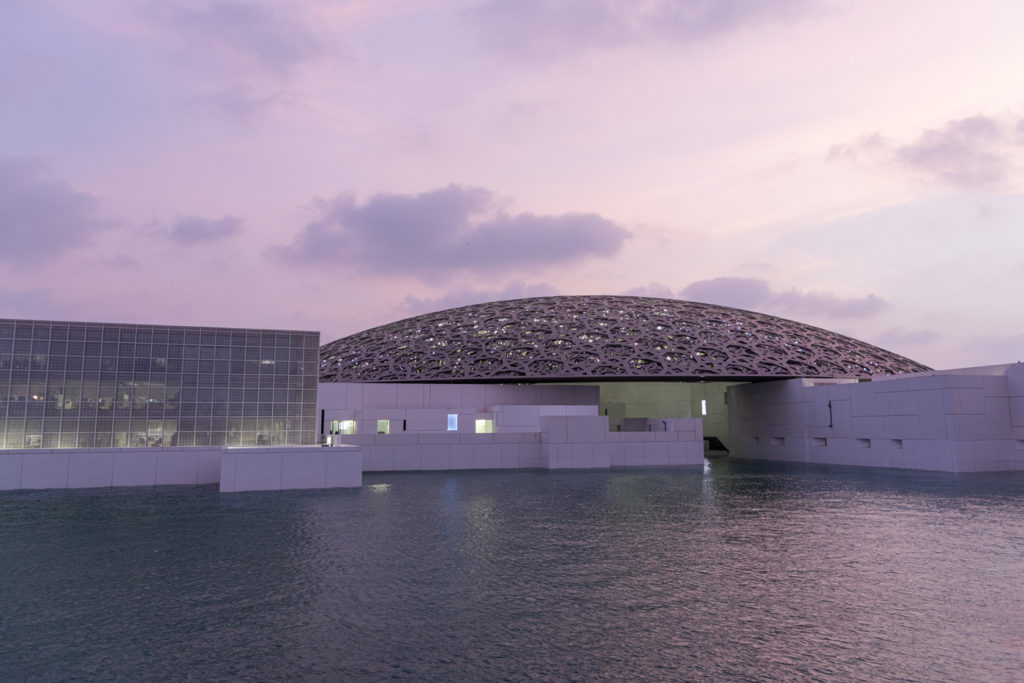
This year will mark the fifth anniversary of the crown jewel of Saadiyat Island: The Louvre Abu Dhabi. Founded by an inter-governmental agreement between France and Abu Dhabi, this Louvre boasts more than 700 pieces of artwork in its permanent collection and has become the most-visited museum in the Arab World. All told, the UAE will pay nearly a billion Euros for France’s partnership, consulting, and use of the Louvre name.
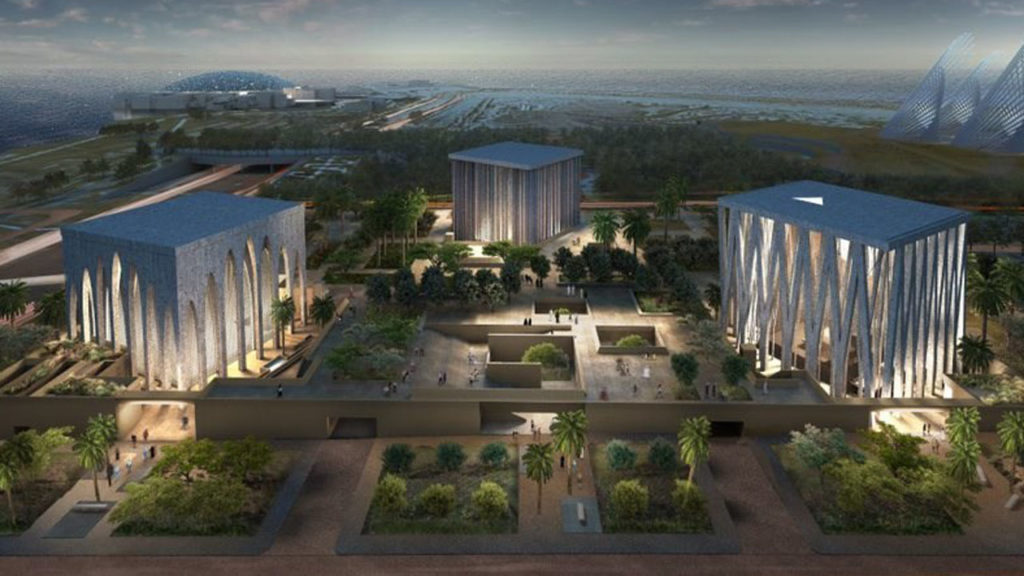
The Abrahamic Family House, to be built in Abu Dhabi, UAE (PRNewsfoto/The Higher Committee for Human )
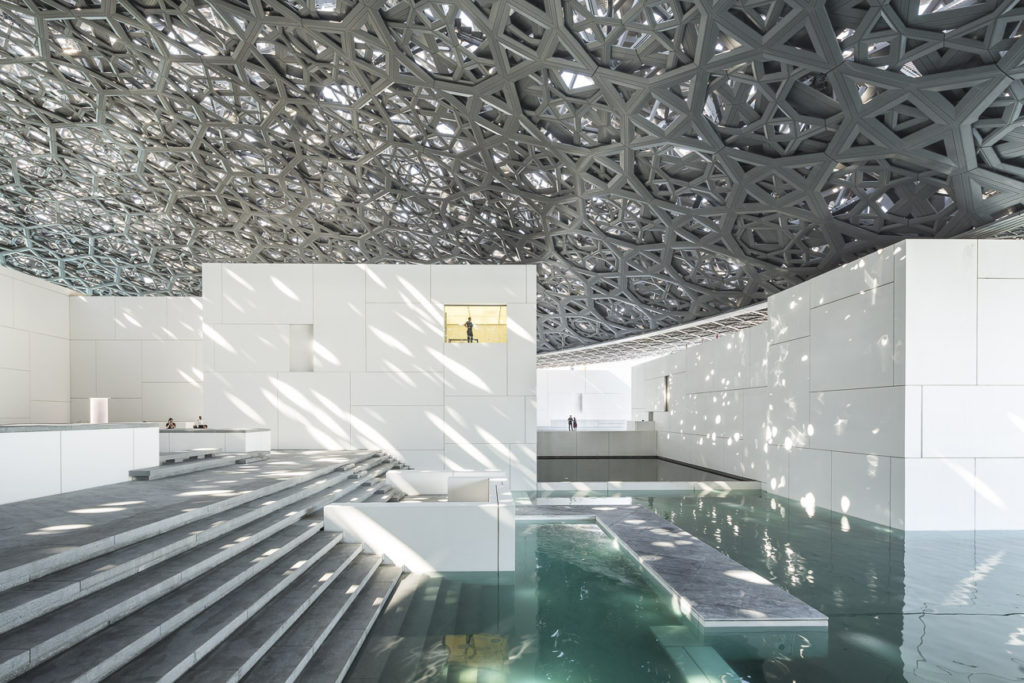
Designed by French architect Jean Nouvel, the $650 million building is defined by a massive, ornate dome that hovers above the galleries’ massing and the waters of the Gulf. Inspired by the cupolas common in Islamic architecture, Nouvel’s roof is an intricate marvel of engineering. It nests nine layers of geometric latticework to disperse hundreds of beams of light from the hot desert sun. Meant to evoke light passing through date palm fronds in an oasis, the dome alone weighs 8,000 tons and allows less than 2% of sunlight to pass through its aluminum “stars” at any given time.
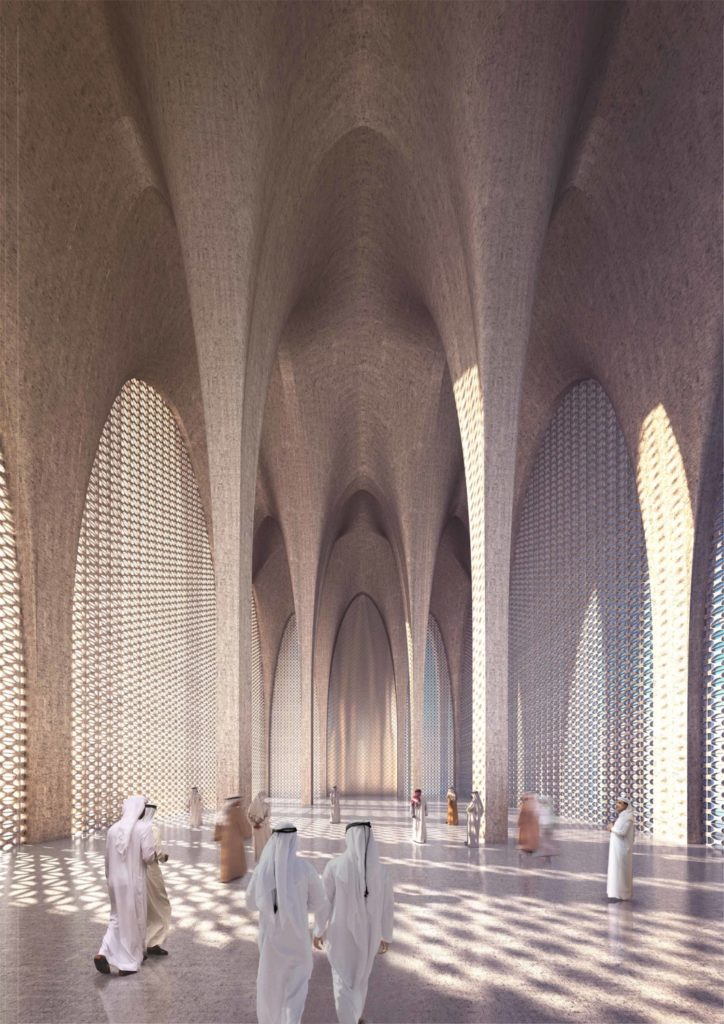
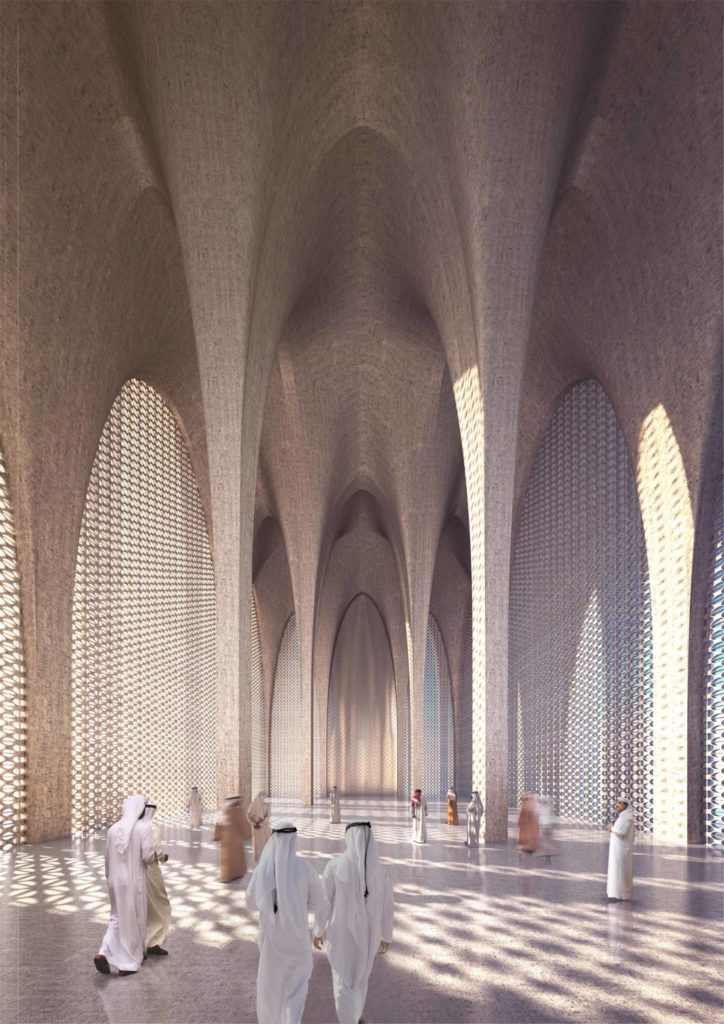
If the Louvre is Saadiyat Island’s established anchor tenant, its new neighbor, Abrahamic Family House, is the newest attraction. Set to open this year, the project is an interfaith complex built to host three houses of worship: St. Francis of Assisi Church, Imam Al-Tayeb Mosque and Moses Ben Maimon Synagogue. In a region often charged by religious tensions, the complex’s message—inspired by a 2019 joint statement between Pope Francis and Ahmed el-Tayeb, Grand Imam of al-Azhar, is a clear one: we have more in common than we may think.
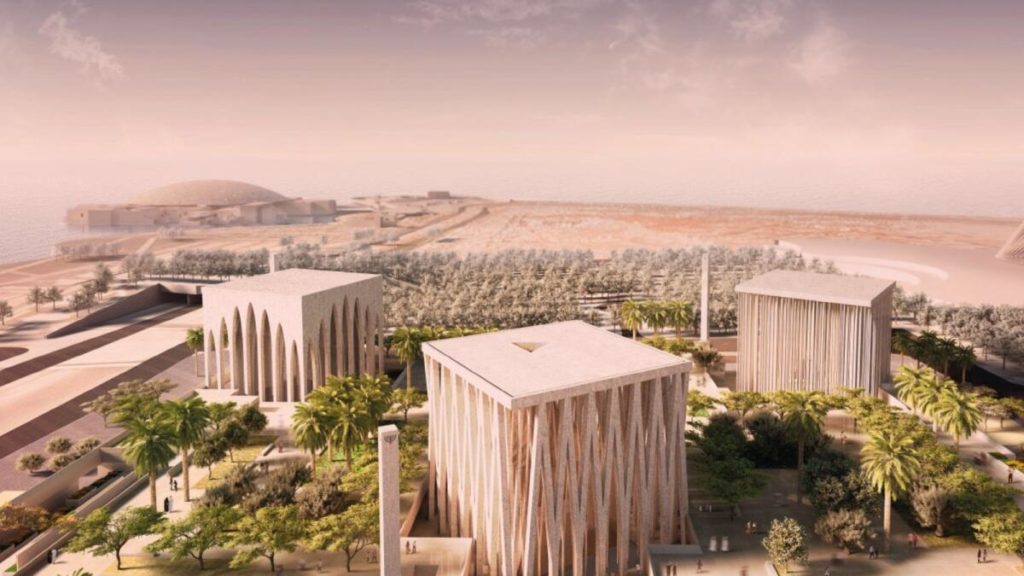
Designed by Ghanaian-British architect David Adjaye, the complex seeks to balance the common thread between Islam, Christianity, and Judaism while also embodying their singular traits. Each of the three structures is shaped like a cube and is identical in size. However, each of the three buildings has a distinct facade, characterized by their own pillars, openings, and geometry. The overall effect emphasizes commonality over difference, eschewing centuries of baroque religious motifs in favor of minimal, geometric forms.
All three temples sit atop a large plinth structure that serves as a secular visitors’ center, encouraging visitors to mingle and find literal common ground. The precise and balanced effect is intentional. “As an architect I want to create a building that starts to dissolve the notion of hierarchical difference,” says Adjaye. “It should represent universality and totality – something greater, that enhances the richness of human life.”
Both the Louvre Abu Dhabi and Abrahamic Family House promise roughly the same thing: cultural compatibility. Like Dubai’s luxury brands, they provide wary travelers with familiar footholds. Oases in the desert, they offer symbols and experiences travelers might expect in Europe: a church, a synagogue, a Van Gogh. The only question is whether visitors to Abu Dhabi will feel like they learned about the genuine culture of their destination amongst all of the culture carefully curated to lure them there in the first place.
More in Archive
Back To The Factory: Cities Bet Big On The Return Of The Office
Quick Summary Audio Back to the Factory: Cities Bet Big on the Return of the Office By Angela O’Byrne, FAIA Facing an uncertain economy and a cracked-open labor market, employers are reaching for whatever competitive edge they can find in the battle for talent. And, while pay an
Editor’s Note – January-February 2023
The Bellringer After Quasimodo’s death, the bishop of the Cathedral of Notre Dame sent word far and wide that a new bellringer was needed. He decided to conduct the interviews in the belfry. Only one person applied for the job – an armless vagrant man with no name. The incredulou
State Of Emergency In The Commercial Real Estate Market In Florida – An Insurance Claims Adjustor’s View
Ron Snouffer is the Owner and CEO of National Claims Negotiators [email protected] State of Emergency in the Commercial Real Estate Market in FloridaAn Insurance Claims Adjustor’s View Florida is no stranger to natural disasters. Every year the state deals with at least one type
Why Is Red For Republicans And Blue For Democrats?
Quick Summary Audio The Coriolis Effect Gaspard-Gustave de Coriolis (1792-1843) was a French mathematician, mechanical engineer, and scientist. He is best known for his work (in 1835) on the supplementary forces that are detected in a rotating frame of reference, leading to is no