
Lieberland – a real world place but also a virtual metropolis in the metaverse!
Quick Summary Audio Real Estate of the Future Liberland, officially the Free Republic of Liberland, is a micronation claiming an uninhabited parcel of disputed land on the western bank of the Danube, between Croatia and Serbia. It’s a 2.7 square mile piece of land referred to as

Real Estate of the Future
Liberland, officially the Free Republic of Liberland, is a micronation claiming an uninhabited parcel of disputed land on the western bank of the Danube, between Croatia and Serbia. It’s a 2.7 square mile piece of land referred to as “Gornja Siga.”

Proclaimed on April 13, 2015 by the Czech right-libertarian politician and activist Vít Jedlička (who is also its founder and head of state), it is a constitutional republic with elements of direct democracy. The state has two Vice Presidents and 5 Ministers; the language is English; the Liberland ‘merit’ is the official cryptocurrency; and the country’s motto is: To live and let live.

Among the many buildings in the metaverse, the gallery space will display and sell NFTs. Rendering: ZHA
According to Jedlička, the ongoing Croatia-Serbia border dispute resulted in a plot of land west of the Danube that wasn’t claimed by either side, though it has been administered by Croatia since 1995.
Liberland does not have diplomatic recognition from any nation, but a few other micronations have expressed support for the concept, the goal of which (as stated on its website) is to create “a society where righteous people can prosper with minimal state regulations and taxes.

Meanwhile, back in London, the structures that brought the late Zaha Hadid’s architecture and design firm (ZHA) enormous fame have always seemed to be ahead of their time, something out of the future. Now, its visionaries (led by principal architect Patrik Schumacher and Mytaverse’s Kenneth Landau and Jaime Lopez) are designing a virtual self-governed city in the metaverse. (Mytaverse powers the immersive, VR interaction and communication technology in the Liberland Metaverse venture. Zaha Hadid Architects’ design is deployed within Mytaverse, an enterprise 3D immersive platform being used by Liberland to bring the city to life.)

The city hall is clearly informed by structures that the architecture firm has built around the world, including the Heydar Aliyev Centre in Baku, Azerbaijan. Rendering: ZHA
It will have a city hall, collaborative working spaces, and even galleries selling non-fungible tokens—very much a nod to Liberland. (About the virtual development, Schumacher explains, “The time is ripe, technologically, economically, and socially, for shifting more and more of our productive lives into the metaverse. The metaverse is just starting to show its potential to empower true global collaboration with global borderless participation.”
He is hoping his virtual metropolis will inspire the development of the real micronation that inspired the metaverse counterpart. That idea is obviously enticing to the 700,000 people that (according to Jedlička) have submitted citizenship applications to Liberland. For now, however, Liberland will exist online in a highly developed virtual reality where visitors’ avatars will network and collaborate.
Places like Liberland—countries with libertarian governments that brag about having few rules and regulations—resonate with the metaverse because it’s built using blockchain technology— decentralized and autonomous.


Rendering: ZHA
Schumacher has managed to unite both worlds; the Liberland metaverse is otherworldly but also altogether realistic, with architectural forms that the firm has already built. And the ones the firm is designing for the metaverse are even more creative because there are almost no limitations when it comes to the freedoms of virtual reality.
Some of the out-of-this-world features of the ZHA metaverse are hovering rooftops, enormous interiors with no need to consider energy efficiency, and auditoriums that can expand and shrink based on the number of users.
Though the metaverse is still in the planning stage of development, virtual cities are likely to become more commonplace as the world continues to adapt to the digital environment into which the pandemic essentially threw everyone. Whether or not all major institutions will eventually have a major presence in the physical and digital worlds is yet to be determined, but it’s not a reality we can completely write. After all, some of the world’s most coveted architecture firms are on board to design major parts of it. See a VIDEO HERE.
More in Archive
Back To The Factory: Cities Bet Big On The Return Of The Office
Quick Summary Audio Back to the Factory: Cities Bet Big on the Return of the Office By Angela O’Byrne, FAIA Facing an uncertain economy and a cracked-open labor market, employers are reaching for whatever competitive edge they can find in the battle for talent. And, while pay an
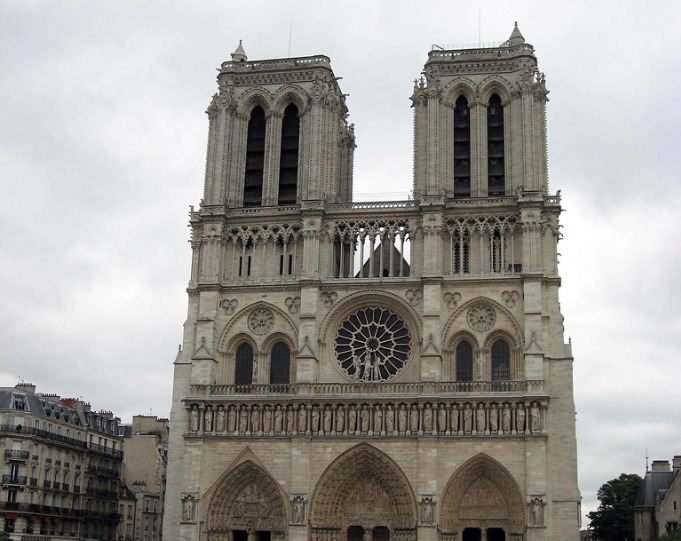
Editor’s Note – January-February 2023
The Bellringer After Quasimodo’s death, the bishop of the Cathedral of Notre Dame sent word far and wide that a new bellringer was needed. He decided to conduct the interviews in the belfry. Only one person applied for the job – an armless vagrant man with no name. The incredulou
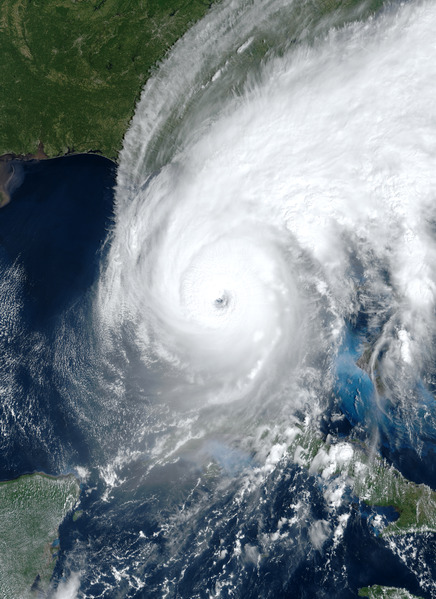
State Of Emergency In The Commercial Real Estate Market In Florida – An Insurance Claims Adjustor’s View
Ron Snouffer is the Owner and CEO of National Claims Negotiators [email protected] State of Emergency in the Commercial Real Estate Market in FloridaAn Insurance Claims Adjustor’s View Florida is no stranger to natural disasters. Every year the state deals with at least one type
Why Is Red For Republicans And Blue For Democrats?
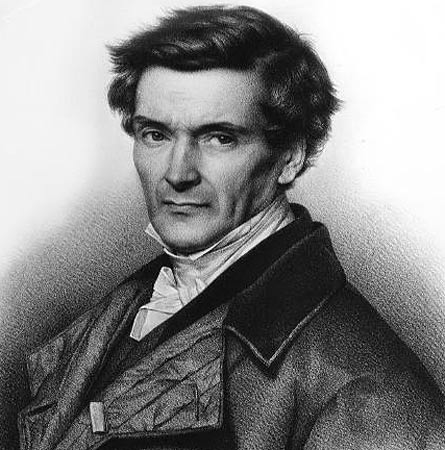
Quick Summary Audio The Coriolis Effect Gaspard-Gustave de Coriolis (1792-1843) was a French mathematician, mechanical engineer, and scientist. He is best known for his work (in 1835) on the supplementary forces that are detected in a rotating frame of reference, leading to is no